


Written by: David Clayton


“Great players often pay a heavy price for their gift from God.”
Diego Maradona 1996


On July 15, 1995, City signed Georgi Kinkladze. This is the story of his complicated journey to Manchester, and what happened next...
Robizon Kinkladze was from a small town in western Georgia called Ozurgeti, which is less than 50 kilometres from the Black Sea.
In 1964, when he was 19, he moved to Tbilisi to study at the Sports Education Institute. Soon after, he met and fell in love with a local girl, Khatuna Abashidze, and when she was 18 and had finished school, the couple were married.
Not long after, they had a first child – a daughter – whom they named Marina and on July 6, 1973, their son Georgi was born. In those days, bizarre Soviet rules dictated that the father of a newly-born baby wasn't allowed to see their child for the first week. But, three days after Georgi was born, Robizon managed to sneak into the hospital and catch a glimpse of his son. “He's got bandy legs - he'll make a good footballer,” he thought to himself when he saw his son for the first time. Little could he have known how good Georgi would actually become, but his father had set his mind to paving a way for him to one day represent Georgia and earn a living as a footballer and if it wasn’t to be, it wouldn’t be for the want of trying.
After maybe only three or four months, incredibly, Georgi began crawling. They would leave him in one room and within minutes, he had made his way into another room - and his leggings were always full of holes at the knees. As soon as he could stand up on his own, Robizon rolled a football to the infant and Georgi trapped it with his left foot, much to the amazement of his father, since nobody else in the family was left-handed or left-footed. In fact, in those days - because of another archaic Soviet decree - it was actually illegal to be left-handed! Everyone was forced to write with his or her right hand.
In 1977, Inter Milan came to Tbilisi to play Dinamo in the UEFA Cup at the newly-built Boris Paichadze National Stadium. Robizon decided to make the short journey to the ground with his four-year-old son. With a huge crowd of around 100,000 fanatical Dinamo


fans making space a premium, Georgi perched on his dad's shoulders so that he could see what was happening on the pitch. Whenever there was an attack on goal, the little boy started kicking with his legs so hard, that his dad felt bruised and sore by the end of the match.
“From that moment on I knew that this was not just a vague interest. He really wanted to play football,” recalled Robizon. “And from then on, right up until he was 15 or 16, I worked very hard with him.”
Every day, his father would make up fresh fruit and vegetable juice for his son to drink to build up his fitness and give him enough natural fuel to keep him going throughout the day. He would create a juice made from apple, pear, pomegranate, and beetroot. It was not easy. Fresh fruit and vegetables were difficult to come by and were expensive, too. But still, Robizon would always manage to make up one litre of juice every day for his son. And when he had time off work, he would take Georgi to various locations to learn his craft further.
“Whenever we had free time, I took him to the resorts, to the sea or up to the mountains to train,” Robizon revealed. “He was never without a ball. We lived on the seventh floor, but I never let him go up in the lift. He had to bring the football up with his feet; he couldn't pick it up in his hands.”
All the intense and unconventional coaching practices were about to pay off. On September 5, 1979, Robizon took Georgi to the stadium of Young Dinamo to meet with the coach, Antandbil Kheladze. At the time, again because of Soviet law, it was forbidden to simply turn up and enrol in a football school with bureaucracy ruling or restricting almost every aspect of Georgian life. Everything had to be done according to various regulations and centrally approved – leading to yet further disdain towards the Soviet Union. But Robizon asked his good friend Borya Ichinoa, who had been a successful Soviet athlete in 1964 to help out. Borya took him to see Antandbil, but his first reaction was that he had 50 kids there and that Georgi was too young, anyway. He felt it was pointless to continue, but because of his friendship with Borya he shrugged his shoulders and said: “Okay, let's see what he can do.”
Georgi was given a ball, and he started to juggle with it. The coach just stood watching, open-mouthed as the six year-old continued to keep the ball up with consummate ease and looked as though he could do it all day long, too. Antandbil said to Robizon that any kid who could control the ball the way Georgi did could walk straight into his academy.

Robizon worked as an engineer worked about 60km from Tbilisi but every day he would hurry back to see his son train, though he was careful never let Georgi see him and instead would hide behind the fence surrounding the pitch. In the evenings back home, he would go over every mistake his son was making - much to Georgi's surprise and puzzlement. ‘How could he know what mistakes I am making’, he thought to himself, ‘when he doesn’t even see me play?’
Robizon then decided to enrol his son in traditional Georgian dance classes (Mtuluri) to further hone his unique abilities and improve his balance. The Mtuluri is a bit like the river dance with very quick feet movements and Georgi was one of the best in the ensemble and many believed he could go on to one day represent the Georgian national ballet. But both his mother and the dance instructor were opposed to the football and when Robizon was away on work commitments, Khatuna would hide her son’s boots! There was only ever going to be one winner, however.
“The idea behind getting him doing the dancing was to improve his footwork and coordination,” said Robizon. “He went to classes for three or four years. It really helped him. No other players were doing that - it was my idea. He carried on until he was around 13. He was very talented, and danced solos. They wanted him to stay on and become a dancer, but all he wanted was to become a footballer.

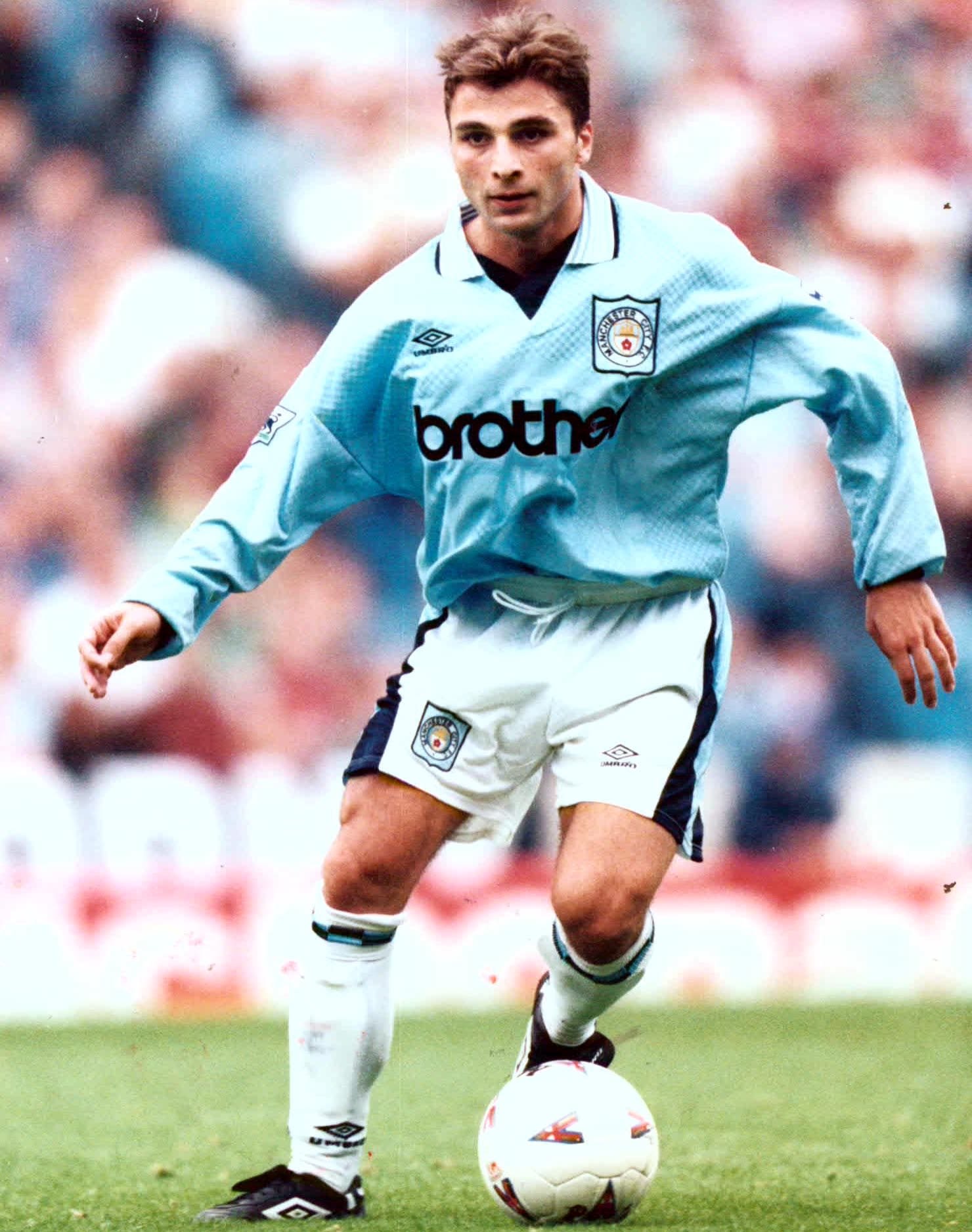
“It was when he was 13 that I knew for the first time for sure that he would become a top player. I helped to give him the speed and the strength, but the football brain was something nobody could teach him. That was inborn. You can't teach that. He had a certain innate instinct about when to pass the ball at exactly the right second. He had a natural ability to read the game.”
Marina Kinkladze, Georgi’s sister recalled the early days when her younger brother first showed talent with a ball and is in no doubt as to who was behind him becoming the player he eventually did.
“I'm his only sister so we have always been very close and, of course, I was with him throughout the time he was in Manchester,” said Marina. “Ours was a typical Georgian family – we were very close. Georgi was always a very quiet, modest person. But he was always very popular, always surrounded by lots of friends.
“Dad played a huge part in making Georgi a footballer. He was so dedicated and worked really hard with him.
“But then he was always very special when it came to various sports. Despite his height, he was a fantastic volleyball player too.


"I remember once at the swimming pool; a coach came up to him and said he could be a top-level swimmer. But he always had his heart set on football.”
One of his childhood friends, who would also go on to make a great career for himself, was Shota Averladze who would eventually play for Ajax and later, Glasgow Rangers.
“We were both together for a lot of the time as youth players in Tiflis (traditional name for Tbilisi, still used by many Georgians),” he said. “I went to School Number 35 which was a famous football school, while Georgi was at the Dinamo Academy. The Dinamo Academy was famous, not just in Georgia, but the whole of the Soviet Union, and it was where every good youth player ended up. Our teams used to play each other – everyone used to come and watch the games and Georgi always stood out as the best player. Then I moved to Dinamo, and we played together for their second team when we were aged around 16.”
Mamuka Khvaratskhelia was once the Press Officer for the Georgian Football Association and a good friend of Robizon Kinkladze. The pair met when they were sent to guard Tbilisi Airport during the civil war, which was bracing itself for a terrorist attack. He recalls how his friend’s son first captured his imagination. “Georgi was 16 when I first saw him,” said Khvaratskhelia. “He was playing for Mretebi in the very first year of the Georgian national championship back in 1989. It was also my first year as a football journalist. He then went on to play for Dinamo's second team, which was no mean feat as they were very hard to get into."
“We played in the Second Division of the Soviet league,” continued Shota Averladze. “Georgi went to Mretebi Tbilisi, the first ever official professional club in the former Soviet Union in 1989. In practice, all the clubs were professional in that players were being paid, but this was the first club that was openly professional.
“Georgi had a fantastic couple of years with Mretebi and helped them gain promotion to the Georgian Premier Division. Word had already got out about him by then and half of Tiflis used to turn up to watch him. He was absolutely brilliant; nobody could get the ball off him.”
But with Georgia often no more than a war zone, in 1993 Dinamo sent their promising young stars abroad for safety reasons. “Georgi went on loan at Saarbrucken in Germany,” added Averladze. “A lot of Georgian players had gone abroad for six months on loan back then, but we all promised to come back to Georgia after that to help the new Georgian league.

“We started in the national team together. We both made our debuts against Azerbaijan, and we won 5-2, and he provided the assist for my first goal, then scored one himself. We were already very good friends by then.”
After a largely unhappy time in Germany with Saarbrucken, where he made 11 starts without scoring, Georgi returned home to resume his career. It had proved a tough, uncompromising league and he didn’t particularly enjoy being in Germany or being away from his family. As the civil war raged on in Georgia, Kinkladze returned to the Georgian league, but Dinamo president Merab Jordania wasn’t prepared to risk his precocious talent in such dangerous surrounds and instead sent Georgi off to Spain. He first went to Atletico Madrid, whom it is believed were offered Georgi’s talents for just £200,000 - and then Real Madrid’s second team where he trained alongside Raul and Fernando Morientes and more than held his own against his stellar team-mates in training.
On one occasion, a representative who was visiting from Boca Juniors noticed the young Georgian and after a hastily agreed loan of sorts, Boca took the young Kinkladze to Argentina for a short time. It was an amazing period for Georgi, and he was thrilled when he met his hero Diego Maradona, serving a drugs ban at the time, during his time in Argentina. During his stay, it is believed that arguably the greatest footballer of all-time invited Georgi out for a meal, being so impressed by what he'd seen.
Maradona was believed to be keen to take him to another club he was involved with in Argentina at the time, but nothing transpired. Maradona, however, never forget the young midfielder from Tbilisi.
During his stay, Boca Coach Silvio Marzolini ran the rule over his European trialist but after a week or two he decided to let him return to Georgia because he felt he already was well served in that particular midfield area. Boca’s playmaker was Alberto Marcico and though Marzolini felt Kinkladze was a good prospect, he felt the pair were too similar and decided that Marcico had the edge and the experience over Kinkladze. Marcico had been an idol at Boca, had been an idol in Ferro Carril Oeste and even had become famous when he played in France with Toulouse. In short, Boca were never going to sign an unknown quantity ahead of such an established star.


Local journalist Ariel Cukierkorn from the Clarin newspaper remembered when Kinkladze arrived at Boca back in 1994. During the trial period, he played a game for Boca in the Premier Division, against Lanus and Boca didn’t win. Shortly after, a Boca supporter said to him: "Marzolini doesn't know anything about football because he left Kinkladze out of the team and left Marcico in who is too slow!"
Cukierkorn recalled asking a board member about Kinkladze sometime after he’d gone back to Georgia to which he replied: "The only thing that I can tell is that we let him go and now he is having success all over Europe,” before sighing and shrugging his shoulders.
“Boca Juniors were interested, but for Georgi it was too far away from home, especially as he was so young,” recalled his sister Marina.
As Georgi flew back home, he must have wondered where his future lay if living in Tbilisi was too dangerous. He couldn’t continue to be loaned out to clubs around the globe and all he really wanted to do at that time was play for his boyhood idols Dinamo. His experiences in Europe and South America had broadened his horizons and on his return he had his best ever season with the Georgian champions, scoring 16 goals in just 24 games. As he was voted Player of the Season yet again, those watching him win match after match for Dinamo knew the gifted young star was ready for a much bigger stage.
Kinkladze had attracted the interest of some of Europe’s biggest clubs during what would be his final season with Dinamo Tbilisi. Aged 21 and with a host of top class international displays behind him, the world was his oyster.
His club form was fantastic with a terrific number of goals and assists from his central midfield position further enhancing his reputation. Yet, strangely, no club had actually placed a firm bid for his services. His time abroad with Saarbrucken and Boca Juniors had failed to yield a move away from Georgia and trials with the Madrid giants had still ended with him returning to Tbilisi.
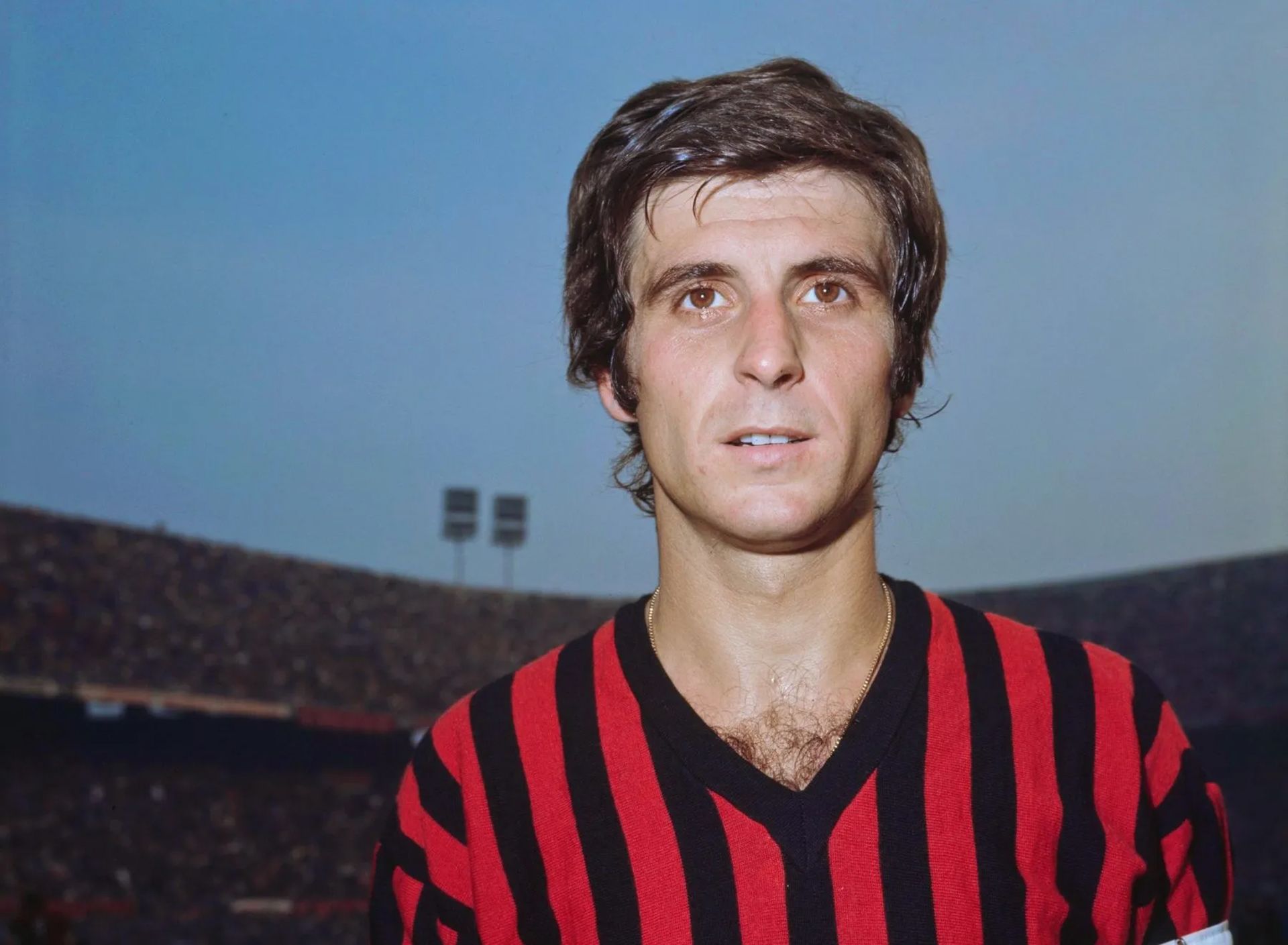
There was interest from several of the leading Italian clubs, particularly AC Milan, and he even earned the nickname “Rivera of the Black Sea” amongst the Italian Press as rumours persisted about a possible transfer. Gianni Rivera is regarded as AC Milan’s greatest ever player and was the Golden Boy of Italian football during the 1960s. Highly regarded for his ‘inimitable midfield leadership, ball distribution skills and sublime passes which resulted in many goals, generally scored by others from his vision’ – according to Forza Azzurri website – with his one flaw was considered to be a lack of defensive skills.

Despite the comparison to the revered Rivera, it was following an awesome display against Moldova for the national team that was ultimately to be his ticket to ride, as footage of that game eventually found its way into the possession of new Manchester City chairman Francis Lee.
Excited by what he’d he seen, he opened a dialogue with Dinamo Tbilisi president Merab Jordania and, using a negotiating skill learned from many years a successful businessman, Lee was promised first refusal should any firm bids come in for Kinkladze.
Kinkladze’s exploits against Wales in the European Championship qualifiers, both in Georgia and Cardiff, had introduced his name to a whole host of scouts who didn’t take long to decide that they were watching a special – and as yet still unsigned – talent. But none had the agreement in place that Francis Lee had and to the Blues’ chairman’s eternal credit, his foresight and timing was impeccable.
Neville Southall, record cap holder for Wales, remembers the damage Kinky did against his country in the two qualifying matches all too well having been in goal on each occasion.
“He ripped us apart in Georgia,” said Southall. “He was different class and the best player on the pitch by mile. We had no information about Georgia before the game, but we knew they’d be fairly decent because most Eastern Bloc teams have a lot of technical ability.
“But they murdered us in Tbilisi, and we got away with a 5-0 defeat – I say got away because it could have been many, many more. Everything went through Kinkladze that day and he was just as good in the return game in Wales.”

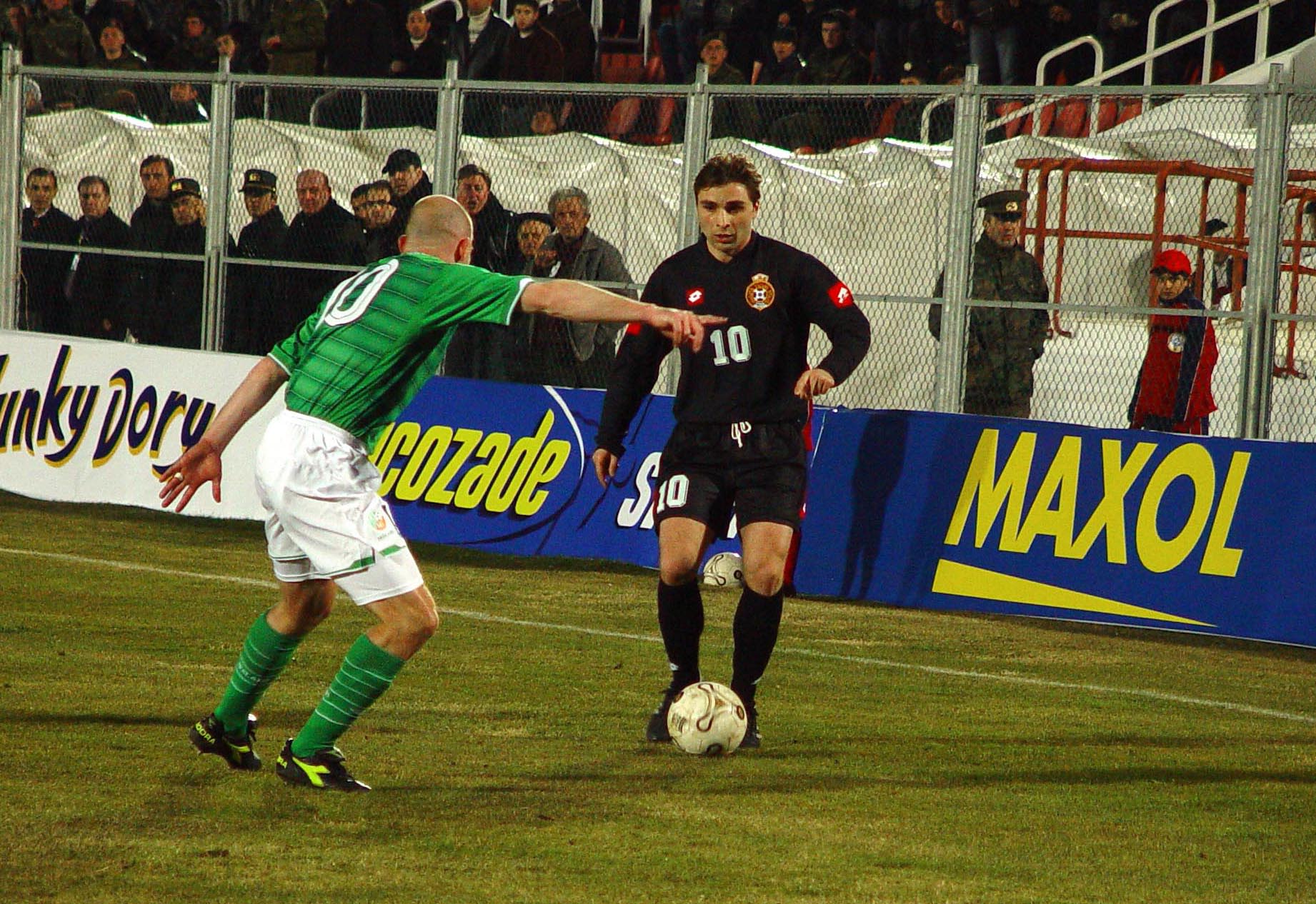
The first meeting in Tbilisi against the Welsh had been Georgia’s record win up to that point and Kinkladze scored his first ever international goal in the 41st minute to make it 2-0. He would save his second goal for his country for the return match, some seven months later in June 1995. The quality of that second strike would also cause a frantic battle from Europe’s top clubs to snap him up.
With City and a whole host of Premier League clubs well represented at Cardiff Arms Park, Kinkladze, who had been superb all evening, made for goal with not long left on the clock. He looked up and then sent a beautiful 20-yard chip sailing over Southall for the only goal of the game.
“It seemed much closer than 20 yards out,” joked Southall. “I recall booting one of the Georgians as they retrieved the ball out of the net, but I don’t think it was Kinkladze. Around that time, it seemed that every international team had one really outstanding player. There was Hristo Stoichkov at Bulgaria and many others around Europe, but Kinkladze was Georgia’s outstanding talent.”
Southall left the pitch with the rest of the Welsh side and the disappointment in the dressing room was sprinkled with a healthy respect for the Georgians - but especially for Kinkladze, who tough-tackling midfielder Barry Horne declared at the time was “the best player I’ve ever seen.”
If Franny Lee had watched that game with a big smile and a large glass of champagne at his side, who could have blamed him? While other scouts hurriedly made phone calls and typed up glowing reports about Kinkladze, he must have felt like the cat that had got the cream. Lee then set the wheels in motion that would end with the player leaving Georgia for good and making a new life in the English Premier League with Manchester City.
“I’d seen Kinkladze playing for Georgia in a TV clip against Wales in the European Championships qualifier in Tbilisi,” recalled Lee in 2004. “I thought ‘Crikey, he’s exceptional’ so I then called an agent – Jerome Anderson in London – and asked if he had a complete tape of that game. He managed to get hold of one for me, but the quality was bloody horrible – I’ve still got it, in fact – and there was a Georgian commentary as well, but you could still see the lad had brilliant ability.
“For the return match with Wales in Cardiff, I sent Jimmy Frizzell down to take a look at him, and he came back and said that he thought he was quite a player: ‘If you’ve got an orchestra, he’ll conduct it,’ was how he put it.”
As with most deals passing through Maine Road at that time, then City club secretary Bernard Halford was at the hub of the Kinkladze transfer from Dinamo from start to finish. With further impressive references from City legend Colin Bell, Tony Book and former manager Frizzell confirming the need to move quickly, a fee was agreed between the clubs and, true to his word, Tbilisi President Merab Jordania had given the Blues first refusal on the player.

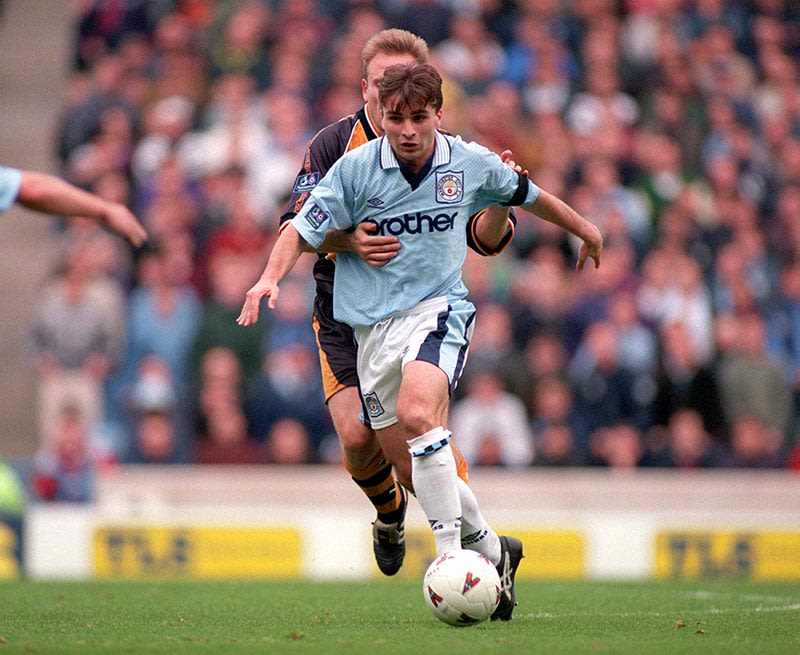
Though Halford was aware of Kinkladze’s growing reputation and the possibility he may be joining City, he didn’t know how far down the line negotiations actually were between Jordania and Lee until he discovered a secret rendezvous was imminent in Zurich.
“It was the summer of 1995,” recalled Halford in 2004. “Several of our scouts had watched Gio and conversations must have gone on between them and Francis. We’d had tapes of Gio in action that had been viewed throughout the summer and the deal gathered momentum when his agent, Jerome Anderson became involved after the club had decided to sign the player.
“Myself and Francis then held a secret meeting with the President of Dinamo, Merab Jordania, who was a former international player himself, and we were determined to come away with a deal in place.
“We met in a hotel room at the Zurich Hilton with Jordania and the agent and we struck a deal there and then to sign him. We’d only gone out for the day and after completing the transfer we flew back to Manchester, arriving home in the evening.
“Then, of course we had to deal with the player and settle his contract, which we did, and he flew over to England to officially sign. ‘Gio’ as he said he liked to be called, didn’t speak any English at this point. We were having a press conference to announce that Alan Ball was the new manager, and we then told the media we had something else to announce after that.
“For once, none of the assembled journalists knew what it was. Alan Ball had been told about the player’s imminent arrival and was perfectly happy with the situation and following the announcement of the manager, we then held another Press conference. At about 4.30pm we brought Gio in and revealed he was signing for City. It was quite a coup for the club.”
City had made a number of unsuccessful signings from abroad over the preceding years – but even so, when Georgi Kinkladze signed from Dinamo Tbilisi during the summer of 1995, it caused surprisingly little attention in the national media. At £2million, it seemed like a bit of a gamble considering City’s dire financial plight at the time, but the deal was brokered and backed by chairman Lee, who, had been hell-bent on bringing the Georgian to Manchester.

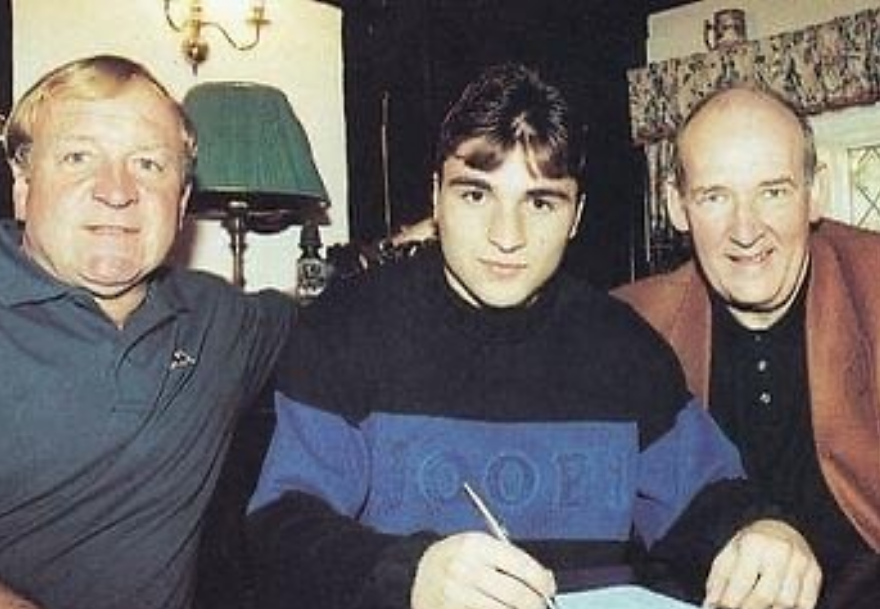
‘Kinky’, as he was soon to become better known as, had starred for Dinamo for several years but at 22, the club knew they had to cash in on him sooner or later.
New City boss Ball had seen enough of his young charge to claim that fans would be “hanging from the rafters” to watch the Georgian – and he wasn’t far wrong.

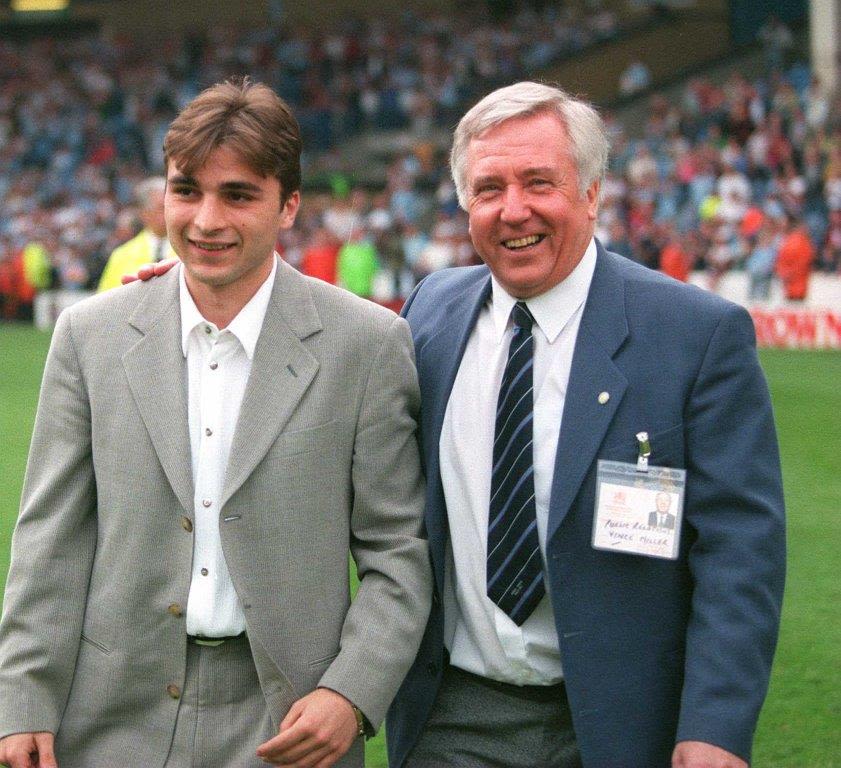
Gio would make his debut at home to Tottenham Hotspur in August 1995, with one outrageous flicked pass immediately winning the City fans over in a game that would end 1-1. It was the sort of skill that hadn’t been seen at Maine Road for many years – at least in sky blue.
What followed, however, must have left Kinkladze wondering if he’d made the right move as the Blues lost nine and drew one of our next 10 game to leave Ball’s side anchored to the foot of the table.
There were some dark days that season, but the one thing that kept the supporters going was Kinky and his magical box of tricks.

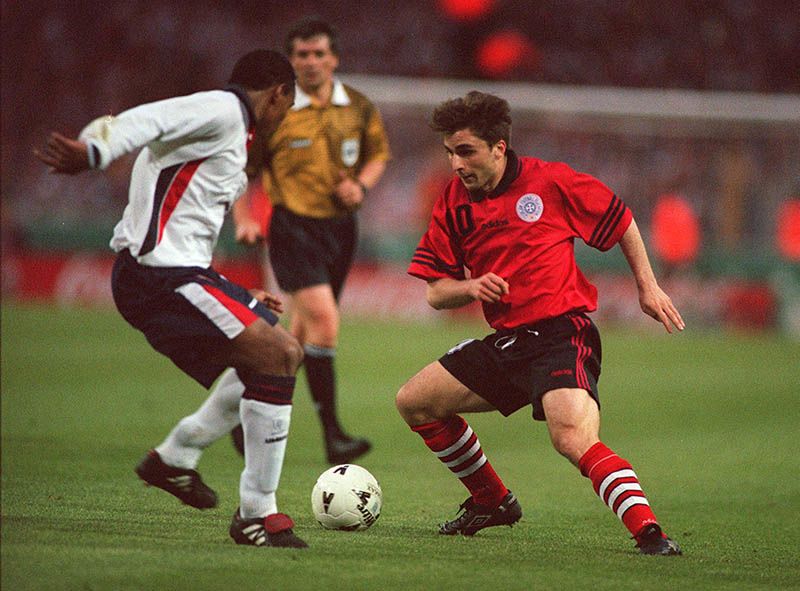
He scored his first goal against Aston Villa after playing a delightful one-two with Niall Quinn - part of a run of four wins in five that saw Ball awarded the Manager of the Month for November, but that brief run of form was the exception in an otherwise dismal campaign.
In December, Kinkladze faced Brazilian star Juninho at Middlesbrough in a contest that was billed as a battle of two of the most breath-taking individual talents in England’s top league. Kinky, quite simply, was in another league that day and scored a fantastic solo goal, even though was in vain as the Blues lost 4-1.
Ball was enduring a terrible time as City boss but the one thing he did get right was how best to handle Kinkladze – it was just the other 10 he had problems with! By Christmas, it is fair to say that the City fans were in complete awe of what many considered to be the most technically gifted player to ever to represent the club.
Against Southampton in March 1996, Gio scored the goal of a lifetime, beating at least five players before coolly lifting the ball over keeper Dave Beasant. At the end of the campaign, Tony Yeboah’s thunderous volley for Leeds United at Wimbledon took the Goal of the Season award on Match of the Day – but, as good as it was, it was a poor second to a goal described by commentator Jon Champion as “mesmeric”.
It is hard to describe in words the pride Georgi gave to City fans during that desperate season. He was the one shining light amid a sea of disappointment and gloom and when the club finally lost its battle against relegation on the final day of the campaign against Liverpool, Kinky left the pitch in floods of tears – and many believed that was that.
Why should he stay? There were bigger and more prestigious platforms to play on than he one City were giving him at that time.

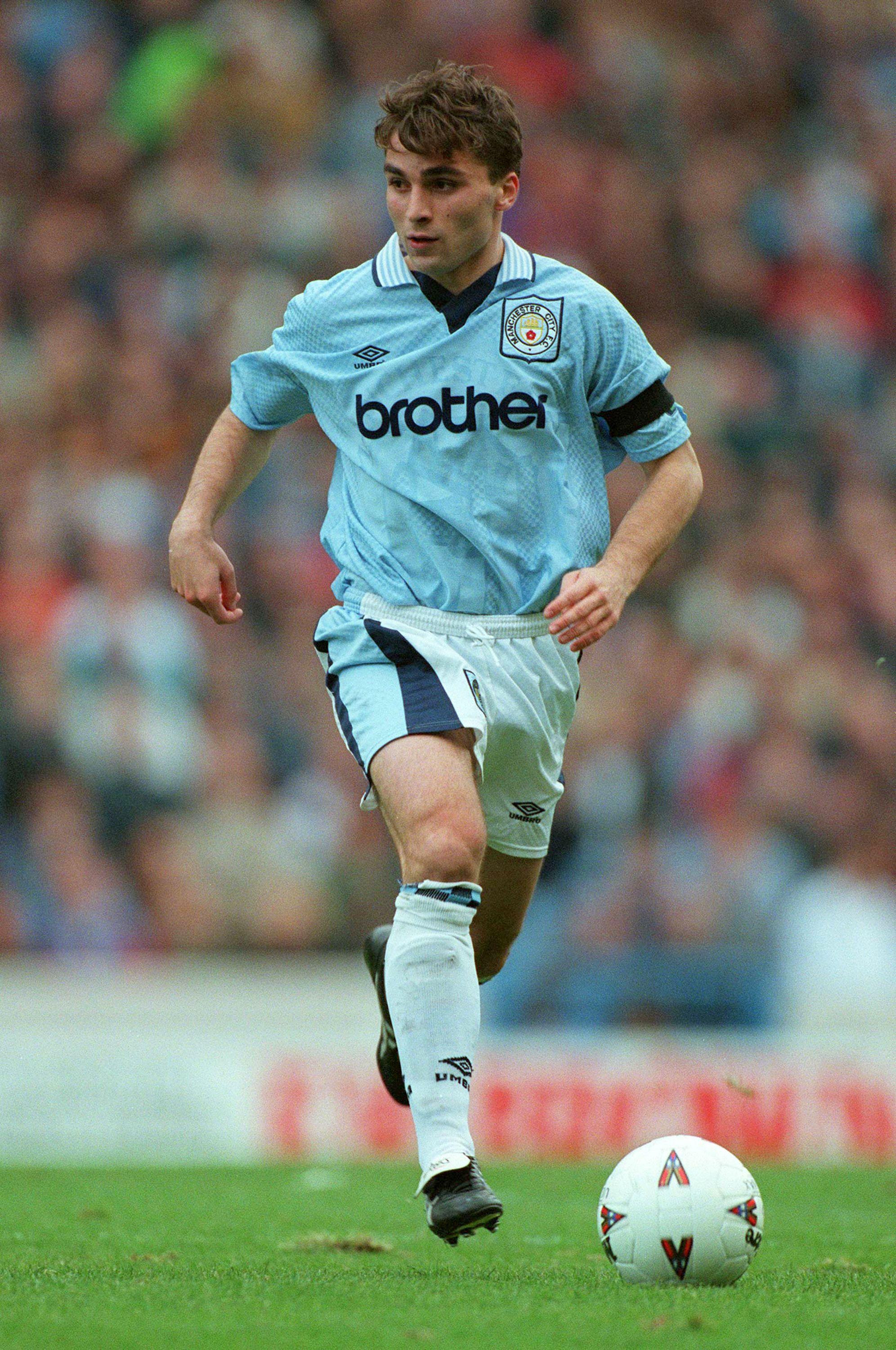
Barcelona, Liverpool and Celtic were all rumoured to be willing to meet the suggested £10million price tag, but though the club was on its knees financially, Lee was not looking to sell.
Instead, the City chairman somehow convinced this 23-year-old genius to remain a Blue rather than join any number of interested suitors and that Georgian sense of loyalty that ran through his DNA resulted in a commitment to stay and hopefully help the club regain top flight status.
Quite how Lee sold him on the idea of – with the greatest respect – games against Southend United and Tranmere, is perhaps more testament to Franny’s persuasive powers over anything else. That said, the adulation he was receiving from City fans would be hard to replicate.
So Kinkladze stayed, but he might as well have carried a neon sign on the pitch saying ‘stop me and win’, as opposition clubs did everything they could to regularly double mark him or, take him out of the game by any means necessary, such was his massive creative influence on the team.
He became an easy target in the second tier, as he was hacked down and regularly subjected to tackles that would be a straight red in today’s game. He received little or no protection from the referees and for any City fan, it was painful to watch - but he soldiered on, perhaps dreaming of better times.
And as the managers came and went at Maine Road – Ball sacked, Steve Coppell quit and Frank Clark failed to inspire – so City’s hopes of promotion fizzled out quickly.
He would miss the final game of the 1996/97 season against Reading with injury, but the City fans made it a ‘Georgi Kinkladze Day’ if nothing else to show their collective appreciation of this incredibly talented player.

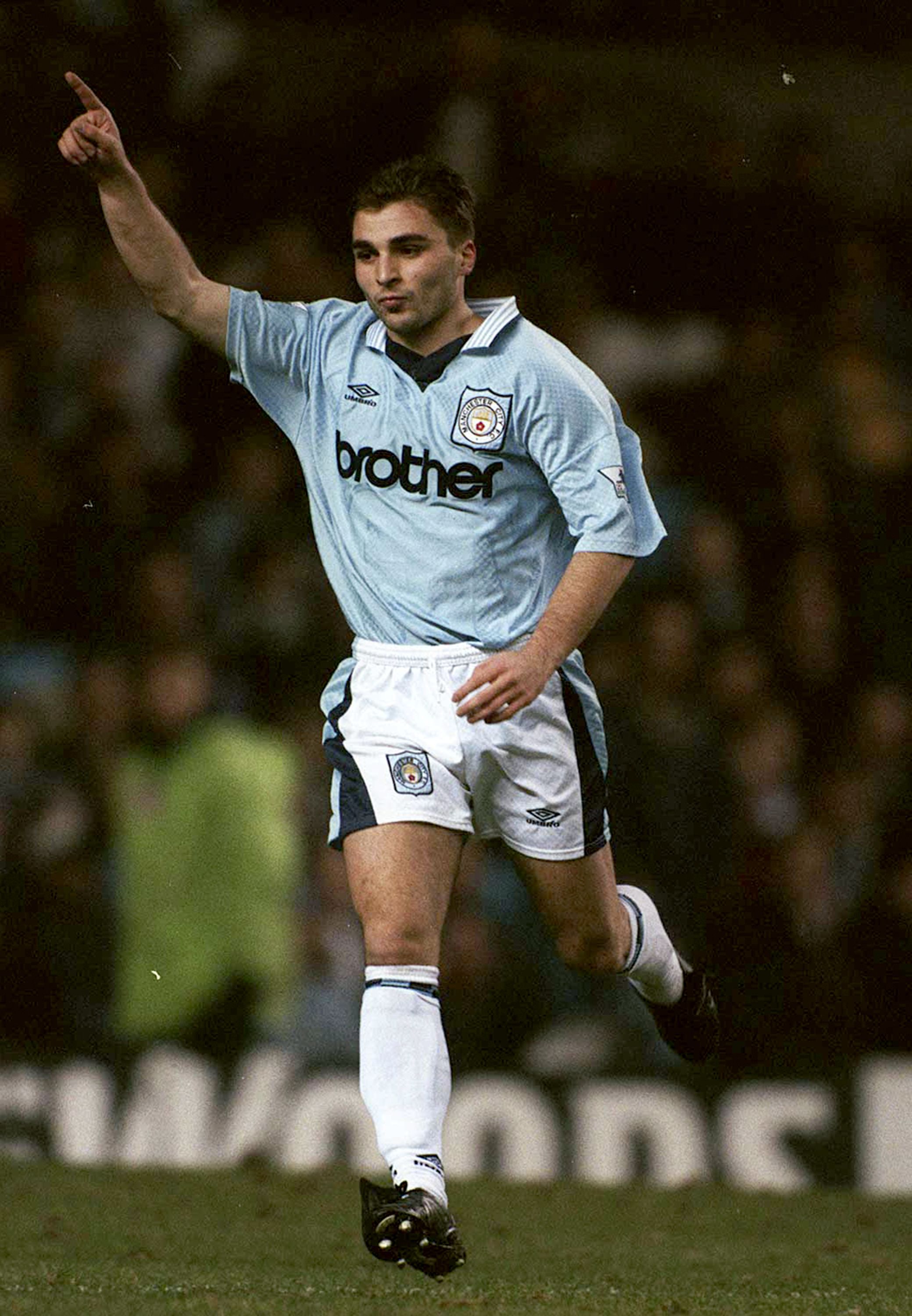
A full house shouted his name from start to finish, waved Georgian flags and even messages of 'Don't go Gio!' flashed on the scoreboard, all in the seemingly vain hope of convincing him to stay one more year. The outpouring of love at the end when the Georgian appeared with the rest of the squad for a lap of appreciation (as it is now called), was incredible, and if he had been planning to move, it seems this was enough to change his mind.
With people camped outside his Wilmslow home, he asked his sister ,“How can I leave these people when there is so much love?”
How indeed? In an ill-fated – but amazingly loyal gesture – he decided to stay and give it one final push for 1997/98.
There were still several clubs waiting in the wings to take him out of the situation, but he had made his mind up.
But it was, in reality, a mistake.
The tackles got worse and his form and whole demeanour suggested he was incredibly unhappy with the way things were panning out.
There were still the occasional highlights in another season of misery for City, such a stunning individual goal against West Ham in the FA Cup and a 30-yard free-kick in a 6-0 win over Swindon, but the team was headed for relegation to the third tier for the first time and Joe Royle was appointed midway through the campaign as a last bid to avoid the drop.
The new boss felt there was “an unhealthy obsession” with Gio at the club. In some ways he was right – the time had come to part company and Gio knew it and so did the fans. He eventually agreed to join Ajax and though Royle dropped him for much of the season run-in, he desperately wanted to play and help the Blues at least stay in the division.
Many believe that if he had played, relegation would indeed have been avoided, but alas we’ll never know for sure.
He flew back from an international game for Georgia by private jet to sit on the bench in the final match of the season, again showing the sort of loyalty and commitment above and beyond the call of duty.

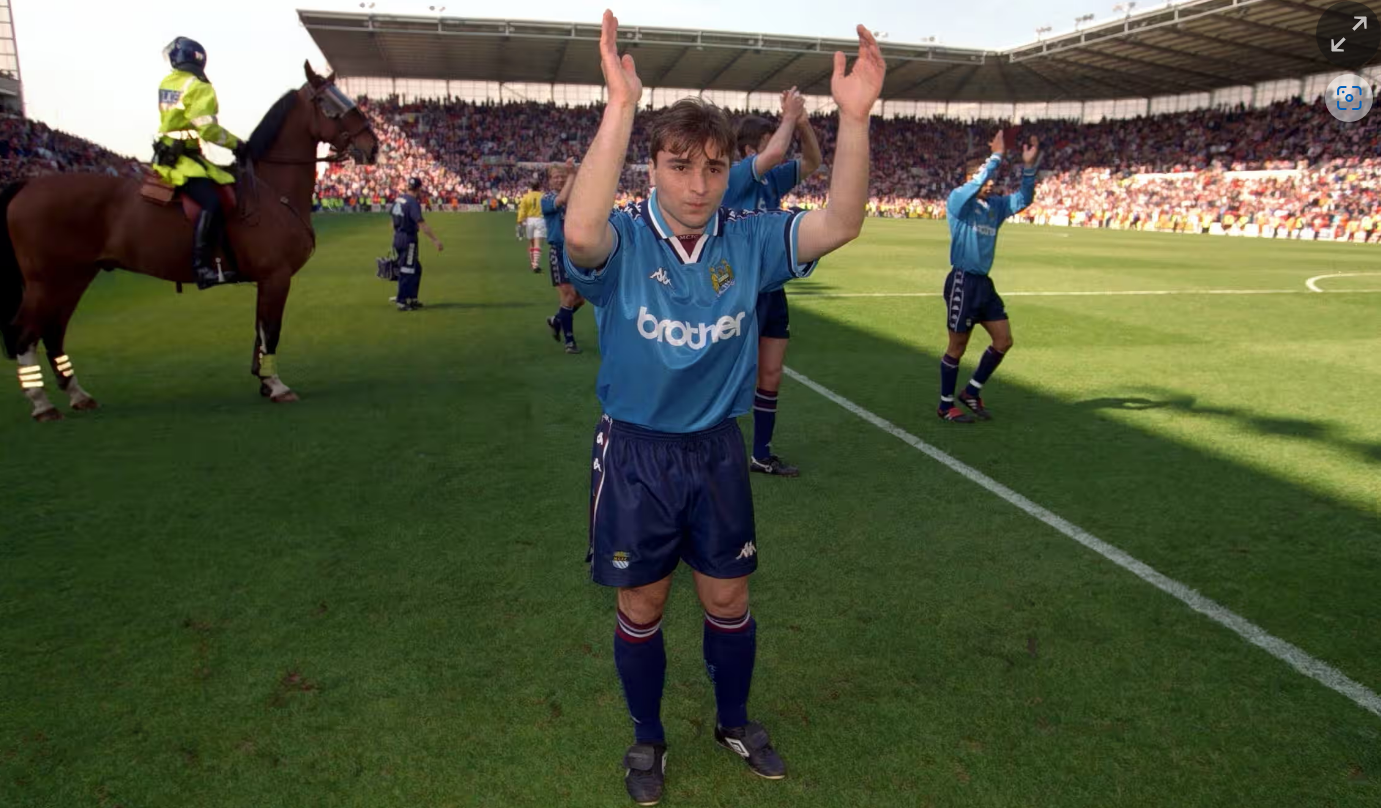
That day away to Stoke, City needed to win and hope others around us lost, but even a 5-2 win at the Britannia Stadium was too little, too late for Royle’s beleaguered side who faced life in the third tier for the first time.
Kinky came on for the final few minutes to a wonderful ovation from perhaps 7,000 travelling fans.
Gio looked as crestfallen as he did in his first season with the club when relegation had also been confirmed on the last day and on the final whistle, he walked over and applauded the City fans with tears once again streaming down his face. He threw his boots into the crowd and walked down the tunnel for the last time with his head down.

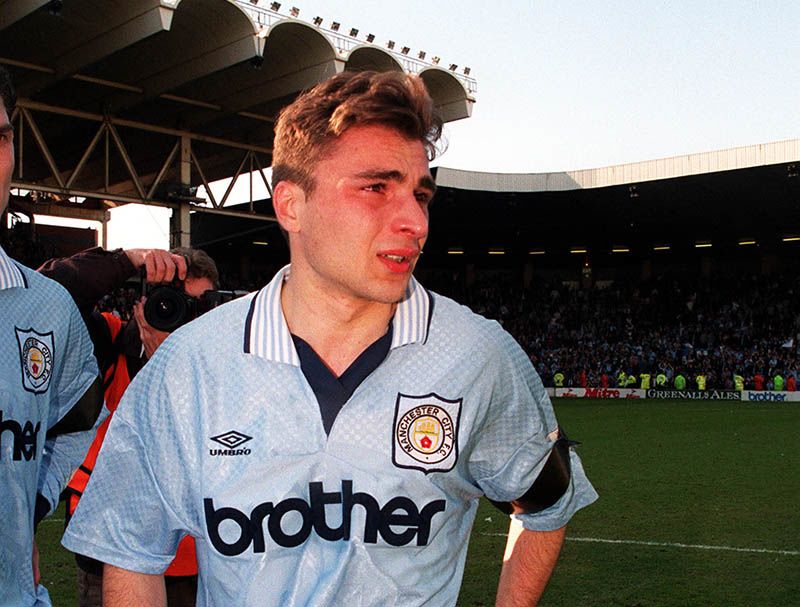
The Blue hordes chanted his name repeatedly, along with ‘Are you watching Macclesfield?’, as an era ended.
The question of what might have been had Georgi been in a better Manchester City team, where the onus had perhaps not totally been on his shoulders in almost every game he played, remains unanswered.
For those lucky enough to witness some of his brilliance, breath-taking goals and genius in the flesh, he remains a beacon of light during an incredibly dark period for the club.

 Built with Shorthand